The initial wave of artificial intelligence demonstrated that software was able to comprehend languages, recognize patterns and aid people in completing increasingly difficult tasks. A majority of these systems depended on sending data to remote servers prior to returning the data back. Cloud computing, while it has accelerated AI adoption, brought problems in terms of the speed of processing and privacy. Cloud computing also added costs for infrastructure.
Nowadays, many engineering firms are evolving towards a different approach. They’re no longer treating artificial intelligence like an inaccessible service, instead they are creating systems that are executed much closer to the point where decisions are being made. This shift is driving the adoption of on-device AI and enabling applications to react faster to changes in the environment, lessen dependence on external infrastructure, and provide an increased level of control over sensitive information.
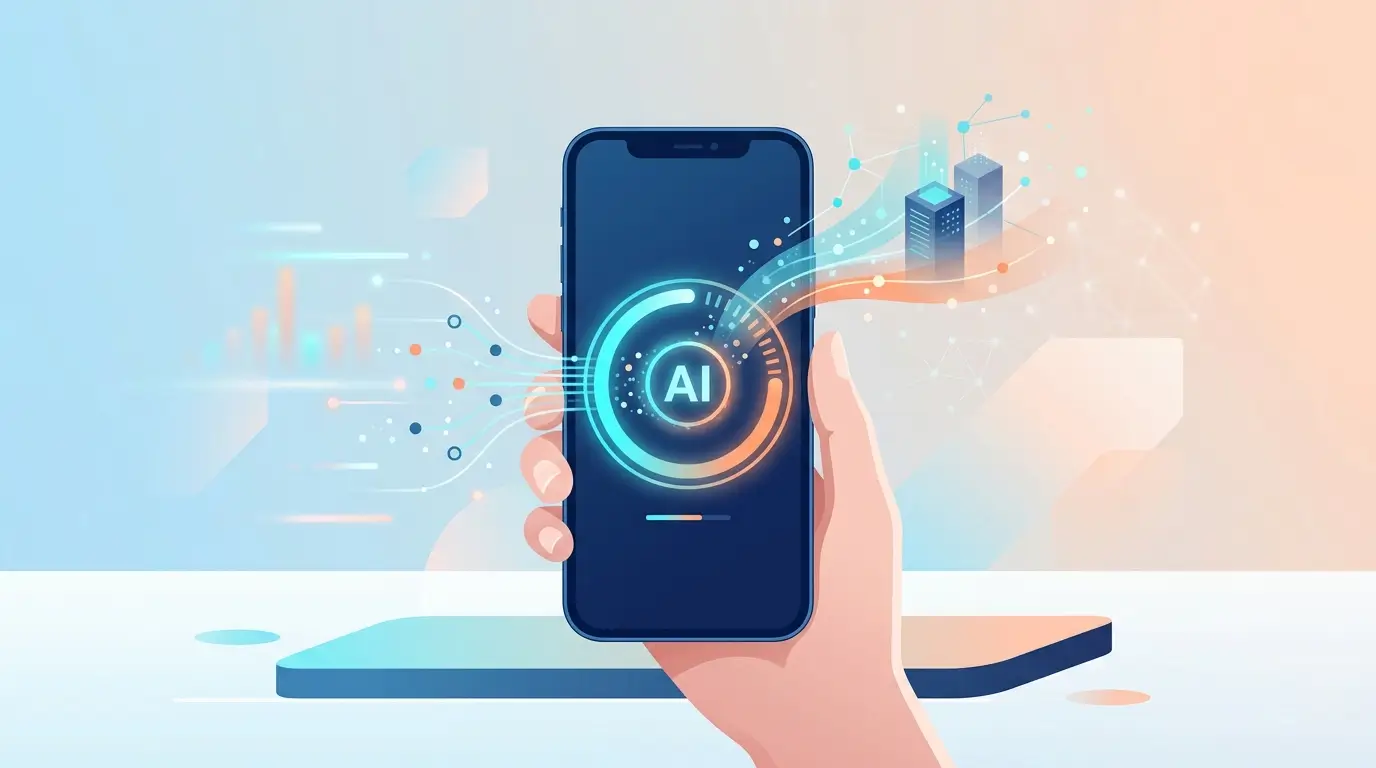
Modern AI requires infrastructure that is designed for real demands
The choice of a language model is not enough to create intelligent software. The architecture that is used to support it is important to the performance of the software. If an AI application performs well in the field it will be based on variables such as runtime efficiency and observational capability.
This growing complexity has increased demand for stronger AI agent infrastructure capable of supporting autonomous workflows, intelligent decision-making, and persistent execution. Instead of relying upon generic systems that can be used for any possibility of use most organizations prefer customized infrastructure tailored to the specific needs of their operations.
Thyn was developed around this philosophy. Instead of creating a single AI product Thyn builds a the foundational runtime engine which supports many different specialized products and allows each product to evolve independently. This design approach lets engineers to focus on solving business issues instead of constantly re-building fundamental infrastructure.
Better tools help developers build better systems
As AI integrates into software, developers need more than APIs. They require environments that ease deployment monitoring, testing, and monitoring and also runtime management.
Modern AI development tools place more importance on transparency and control. Developers must know how their systems will perform in the real world, and be able to measure accurately latency and optimize resource consumption, without sacrificing reliability or performance.
Thyn invests heavily in these foundations of engineering, with a focus on measurable system performance as opposed to marketing claims. Runtime analysis, deployment strategies and evaluation frameworks are all considered core engineering disciplines to strengthen the Thyn’s products.
Specialized intelligence is more efficient than platforms which are one size fits all
There is no way that every AI workload is the same. Financial trading, embedded software, cryptographic apps and autonomous systems all have their own security and performance needs.
Rather than forcing every application with the same infrastructure, Thyn develops dedicated engines built around specific domains. The products can evolve independently and still share the advantages of research in architecture.
AI Coding agents are starting to follow this same pattern. Instead of serving as general-purpose assistance, modern coders are becoming more specialized, helping developers generate code to analyze repositories, perform repetitive engineering tasks and accelerate software delivery, all while still being a part of existing development workflows.
The development of intelligence to better understand where decisions are taken
Artificial intelligence will be more than generating information in the future. Intelligent systems are becoming more adept at analyzing contexts, make decisions and carry out actions with speed.
Local intelligence can offer significant advantages to products that need security, responsiveness, and reliability. On-device AI reduces dependence on networks and lag time while allowing applications to work even when connectivity has been limited. The result is a better user experience, and organizations are able to better manage their data and infrastructure.
While at the same time, scalable AI agent infrastructures ensure that intelligent systems remain visible and maintainable as well as adaptable in the event that requirements change.
Thyn is a brand new company that represents this direction, focusing on the institution behind intelligent software instead focussing on only applications. By combining modern runtimes specially designed engines and powerful AI tools for developers with a modern AI coding agent Thyn helps to build an environment where AI can become faster and more private, as well as more reliable, as well as more useful to developers creating the next generation of intelligent product.